
Merkle · Plasma cutters

Merkle · Plasma cutters
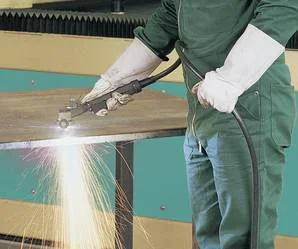
Plasma cutting using compressed air as the plasma gas is an economical alternative to oxy-fuel cutting. Plasma cutting systems can cut all electrically conductive metals, including painted and galvanised metals, such as structural steels, high-alloy chromium-nickel steels, all hardened and unhardened tool steels, aluminium, aluminium alloys, brass, copper, grey cast iron and titanium. Plasma cutting systems are widely used in steel production, assembly, repair, the automotive industry and other fields. The success of plasma cutting is based on the ability of the plasma jet (arc) to produce an extremely intense and tightly concentrated heat flow in the workpiece. The arc temperature is approximately 13,000 °C. Heat enters the workpiece very quickly, so lateral heat dissipation remains relatively low. This heat concentration, corresponding to an energy flux density of approximately 106 W/cm2, produces a narrow, clean kerf. Thermal distortion of the workpieces is very low. High-speed plasma cutting with narrow kerfs is characterised by:
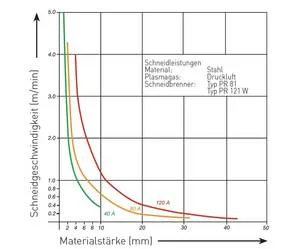
Cutting capacity, cutting speed and current are interdependent. The diagram shows the relationship between cutting capacity and cutting speed at different current levels.
Plasma gas can be produced inexpensively from compressed air.
Thanks to its low consumption, plasma cutting with compressed air is an extremely economical and cost-effective process.
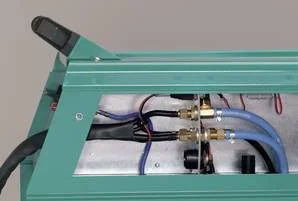
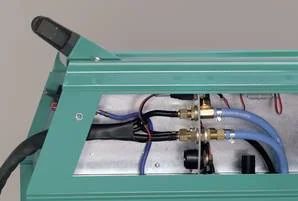
Welding torch connection in the side compartment of the system: clearly arranged, easily accessible and fitted with a safety interlock.
If there is anything we can help you with, please don't hesitate to get in touch!
We only load statistics and marketing cookies with your consent. We use them to measure how the website is used and the effectiveness of our advertising. Cookie notice
These are needed for the website to function and remember your cookie choice. They cannot be switched off.